
OUD
The oud is one of the most iconic instruments in the world of classical and folk music of north African and middle eastern cultures.
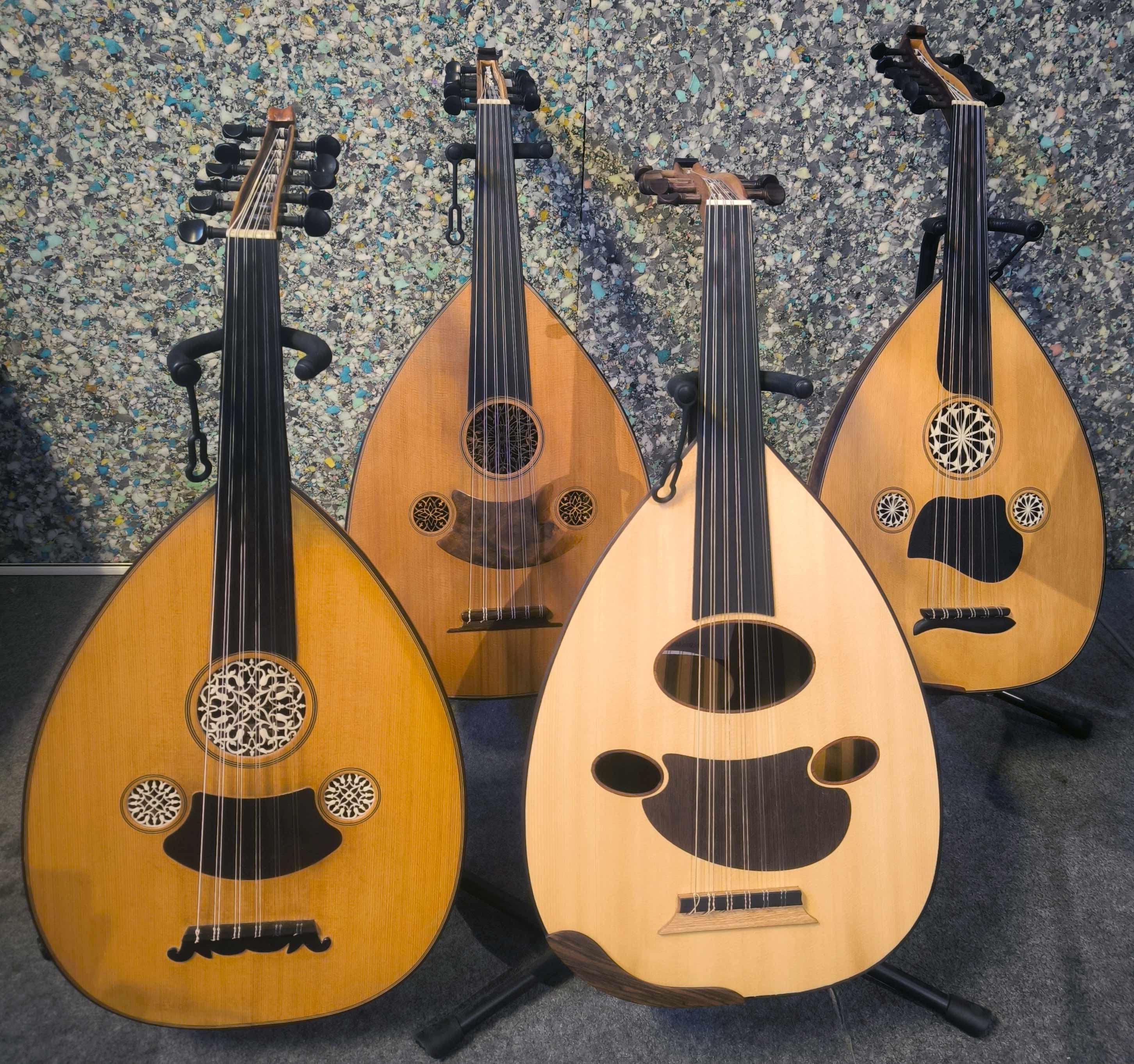
From left to right: Ramazan Calay 2015, Mustafa Copçuoğlu 2023, Fatemeh Mousavi 2024, Mehmet Caymaz 2020
It is a fretless lute with a mid to low register (C3-C6), its strong points are the expressive possibilities in performing melodies and the rhythmic grooves in the lower register. It can play in any key and it is a fully chromatic (microtonal) instrument.
It is not well suited to perform chords due to its fretless nature although some chords can be played, usually in an arpeggiated manner.
PERSIAN SANTUR
The Persian santur is one of the most important instruments in modern Iranian Dastgah music. It is a psaltery-like instrument with 4 steel strings per course, with a mid to high register rich in harmonics, played with two mallets with wooden or felt tips.
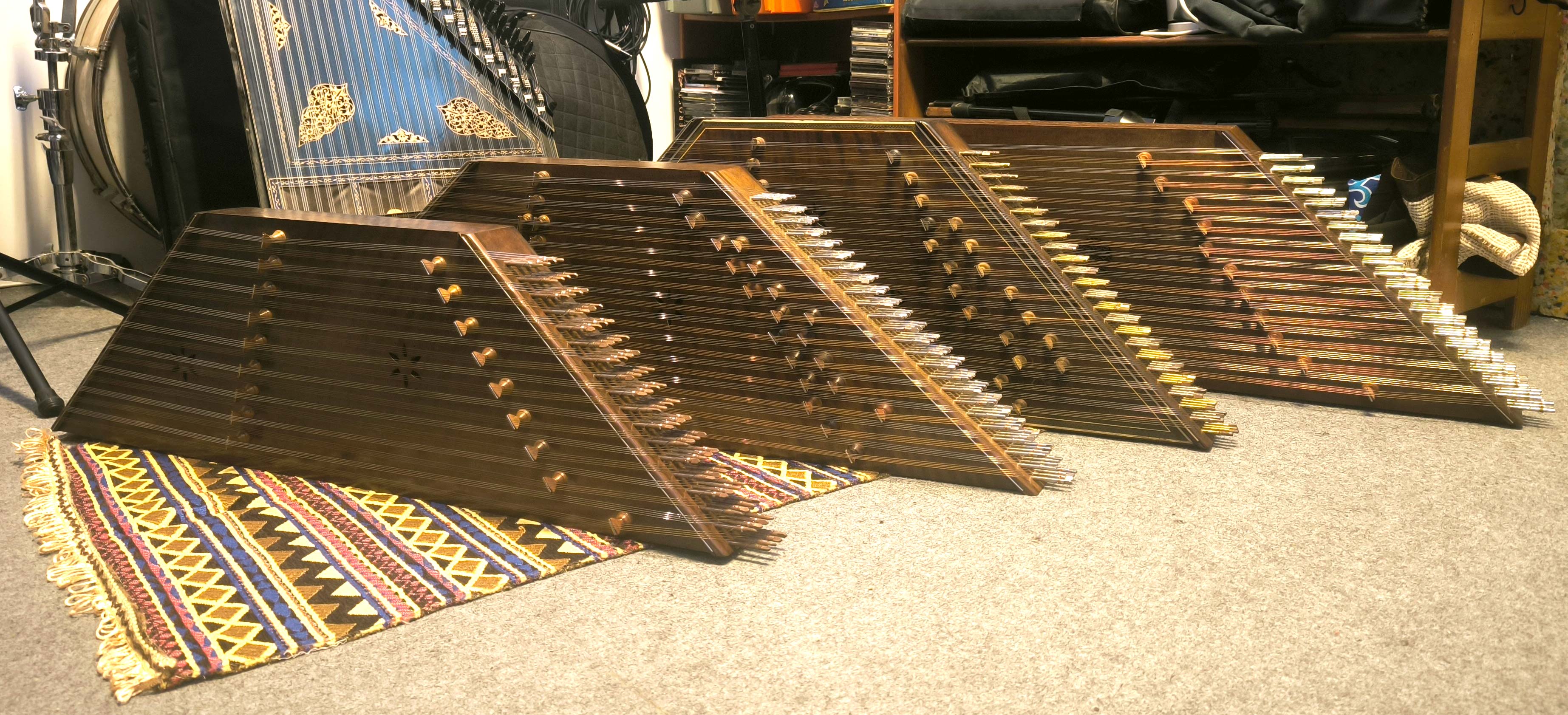
From left to right: LA and SOL tuning, 9 bridges, MI tuning, 12 bridges and BASS LA tuning, 11 bridges.
It shines when performing melodies with strong rhythmic elements and has vast embellishment possibilities, amazing for granting melodies a beautiful high end texture.
It can perform in any key but it is diatonic in its technique and tuning. Accidentals can be performed but scarcely, with need of instrument configuration. Harmony and chords can be performed by arpeggiating or overdubbing intervals.
HAMMERED DULCIMER
The hammered dulcimer belongs to the psaltery family. It is one of many variations of the Persian santur being commonly associated with Irish folk music and religious hymns in western culture.
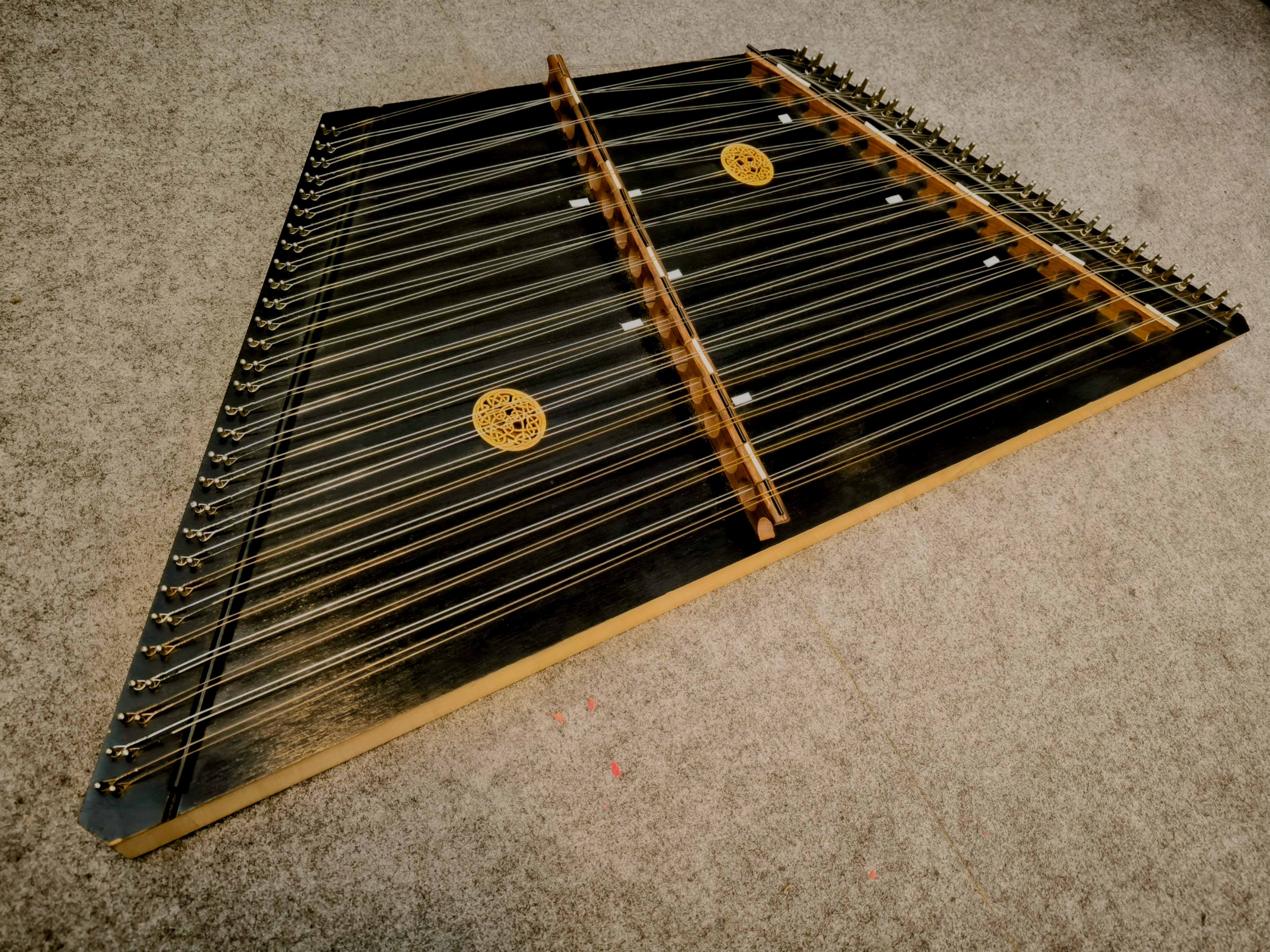
TK O'Brien 15/14 Hammered Dulcimer
It's played with mallets with either wooden tips, giving it an harpsichord-like sound, or covered with cloth that make the attack of the mallets softer, piano-like. It has a sharp attack and a long sustain, like a piano without pedals. It has 2 strings per course.
It has typically 3 octaves range (C3-C6). It is a diatonic instrument suitable for playing melody in any desired key. I have a 15/14 hammered dulcimer which has some repeated notes. This allows me to use accidental notes but it requires proper configuration/tuning before any recording.
Its strong points are the rhythmic expression it can add to any melody and the long reverb-like sustain that adds a special space to any mix.
SIMSIMIYYA
The simsimiyya is a box lyre played in Egypt and neighboring countries since ancient times. It varies in size, type and number of strings. It's played with a plectrum (right hand) and/or fingers.
This instrument has 21 strings (hence the name). It has 3 octaves range (A2 - G5), with a lower octave with wound nylon strings and the other 2 octaves with steel strings.
It is a 100% diatonic instrument (only 7 notes per octave). Recording pieces with accidentals can be done by retuning the instrument or changing octaves. It can perform melody and harmony with harp-like arpeggios and ostinatos.
CÜMBÜŞ
The cümbüş is a Turkish fretless, long-necked stringed instrument, typically categorized as a lute.
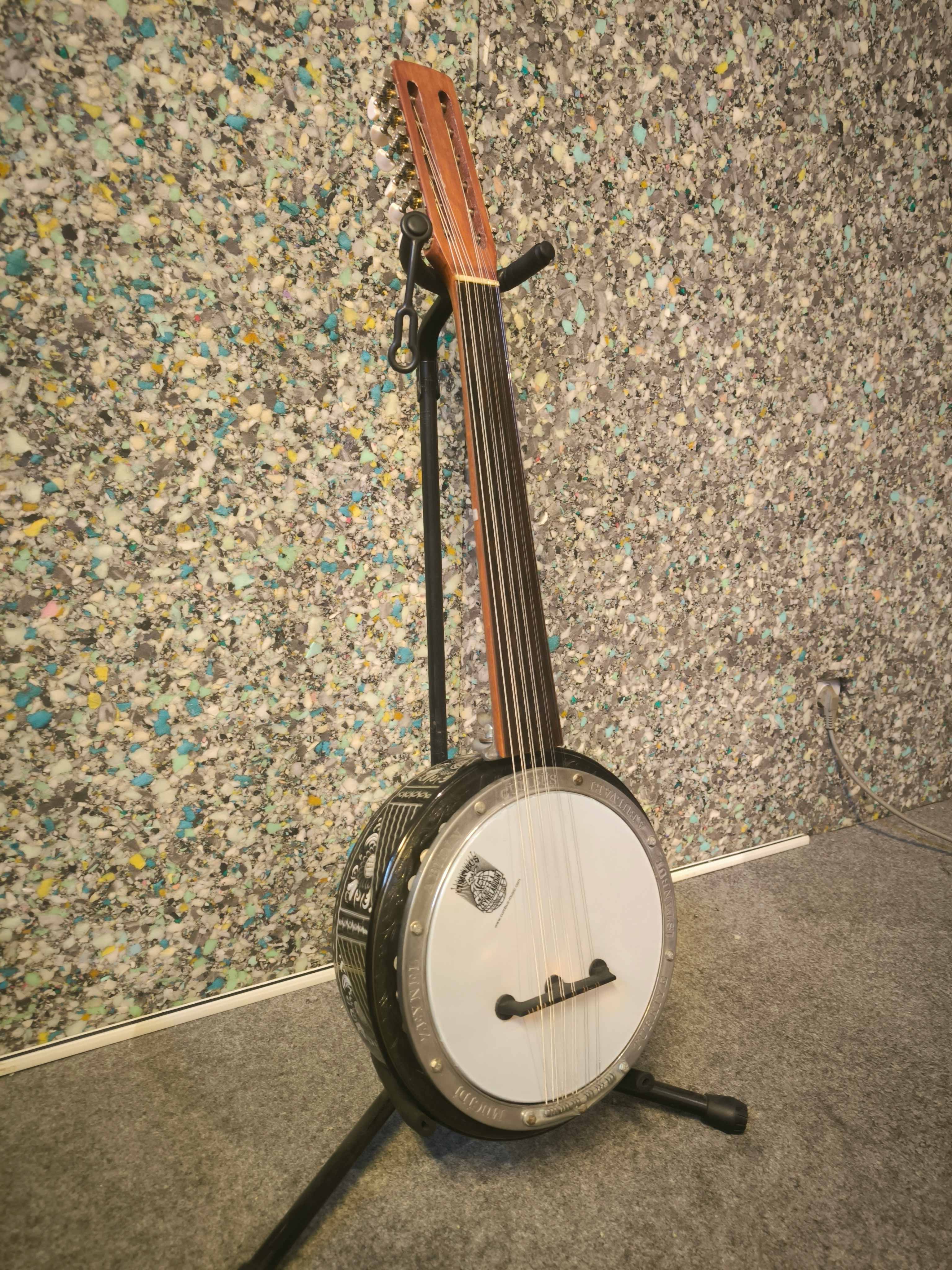
Zeynel Abidin Cümbüs 2010
The instrument’s sound is bright and resonant, with a metallic twang that distinguishes it from other stringed instruments. It is most readily recognized by its metallic resonator, which resembles a banjo’s body, and its long neck, reminiscent of an oud.
Its register is low to mid (F3-C6) and due to it's fretless neck it's most suited to perform melody.
It shines mostly in its higher register, performing melody with glissando and other expressive techniques.
YANGQIN
Derived from the Persian santur, the yangqin is the Chinese variation of this vast family of instruments. It was built for and adapted to play Chinese folk and operatic music, in solo or ensemble context.
It’s played with hammers made of bamboo with rubber and wooden tips. It has 4 full chromatic octaves with a timbre reminiscent of Chinese music. The lower register sounds quite different than the higher, which sounds much brighter due to different string types.
Being one of the most complex instruments of the hammered dulcimer family, it's most suited to perform melodies that require chromatic passages and use rhythmic expression techniques.
KANUN
The kanun or qanun is a zither-like string instrument played in North Africa, East Mediterranean and Minor Asia. It's origin can be traced to the ancient civilizations of the Levant geography. It's plucked with two tortoise shell plectrums or with fingernails.
There are two main kanun types, Arabic and Turkish kanuns. The first is bigger, with a wider lower register. The later, the one I own, is smaller and has more levers to enable the performance of Turkish classical music. Turkish made kanuns usually have 26 courses, range of more than 3 chromatic octaves (A2-E6) and use PVF or nylon strings.
The kanun possesses a unique timbre. It can resemble an harp but the hard plectrums give it a stronger attack and very different expressive possibilities. It is a very versatile instrument that is able to play in any key and perform complex harmony and melody.
ELECTRIC OUD
The electric oud is a modern version of the traditional acoustic oud.
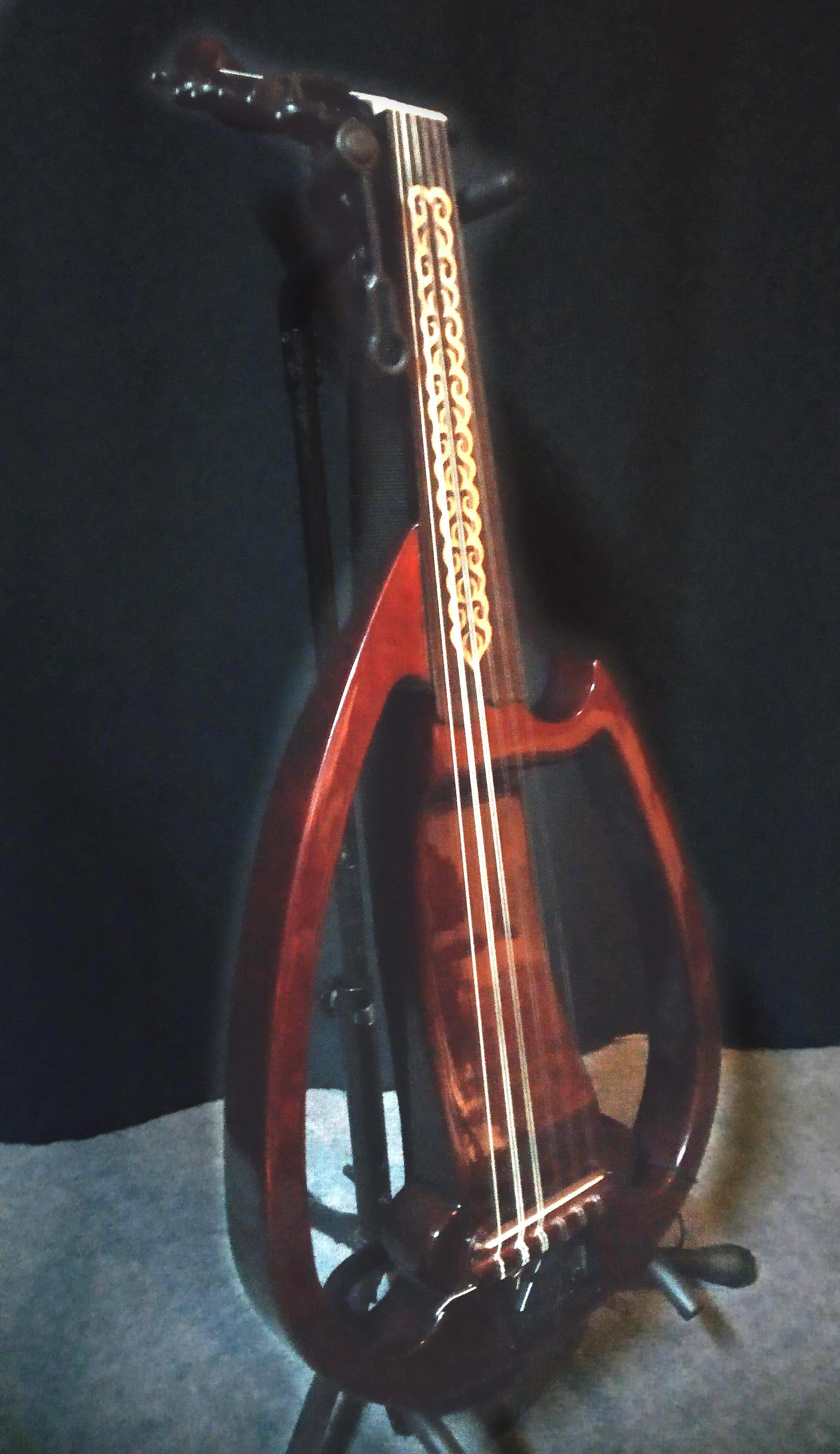
Factory made, Fishman pickups 2022
Its sound, instead of being produced by a wooden bowl-shaped body, is produced via an electric transducer. I've installed a Fishman Presys+ pickup system for a solid and customizable sound.
I use the electric oud with Ff tuning (F3-F6) to obtain a higher register. For timbre I use a combination of VST amp sims and standard amp micing with a SM57. I find this combination rich in options, which can be tailored according to the desired timbre.
Regarding performance, everything stated about the traditional oud applies.